
Designing a Brand for a SaaS Platform for Schools: Lessons from the B2I Frontier
- Martin Harling-Coward

- Sep 23, 2025
- 3 min read
Most branding playbooks split neatly into B2B or B2C.But when you’re building a SaaS platform for schools, neither fits.
Schools are not single “consumers,” nor are they classic “business buyers.” They’re a rich mix of headteachers, teachers, governors, students, parents, IT leads, and safeguarding teams—each with different priorities, constraints, and emotional drivers. I sometimes call this space B2I (business-to-institution) or even B2School.
It sounds like a neat label. In practice, it’s anything but neat.
Brand ≠ Logo. It’s a Meaning We Co-Create
If there’s one truth to hold onto, it’s from Marty Neumeier’s The Brand Gap:
“A brand isn’t what you say it is. It’s what they say it is.”
This resonates sharply when working with schools. You can write the perfect brand guidelines and design a flawless logo, but the brand only really exists in the staffroom conversations, in how teachers explain you to each other, in how parents describe you at the school gate.

Three Shifting Layers of a School SaaS Brand
Over the last few years building a wellbeing platform for schools, I’ve come to see school branding challenges in three shifting layers. They’re less like funnels and more like overlapping rings:
Institutional trust – schools need to know you’re safe, compliant, and reliable.
Human belief – individual staff need to feel you make their working day easier or more inspiring.
Learner resonance – students need to feel ownership, not surveillance.
Any brand expression—copy, product design, customer success—has to connect these three layers. Miss one, and the brand will never feel whole.

Personas: More Like a School Map Than a Customer Funnel
Typical B2B persona work assumes a linear buying committee. Schools are messier.
The budget holder might be the school business manager.
The gatekeeper might be an IT lead worried about safeguarding or data.
The champion is often a passionate teacher or head of year.
The beneficiaries are students and parents.
They don’t all talk to each other at the same time. Sometimes the teacher champion moves jobs and your relationship evaporates. Sometimes a parent complaint fast-tracks a decision.
I’ve learned to map influence rather than create flat personas. Think of it as a school ecosystem map, not a funnel.

Sales and Marketing: Rhythm Over Funnel
The classic B2B “awareness → consideration → conversion” funnel feels too rigid. Schools run on an academic year with term dates, inspection cycles, and funding rounds. Budgets open and close like tidal pools.
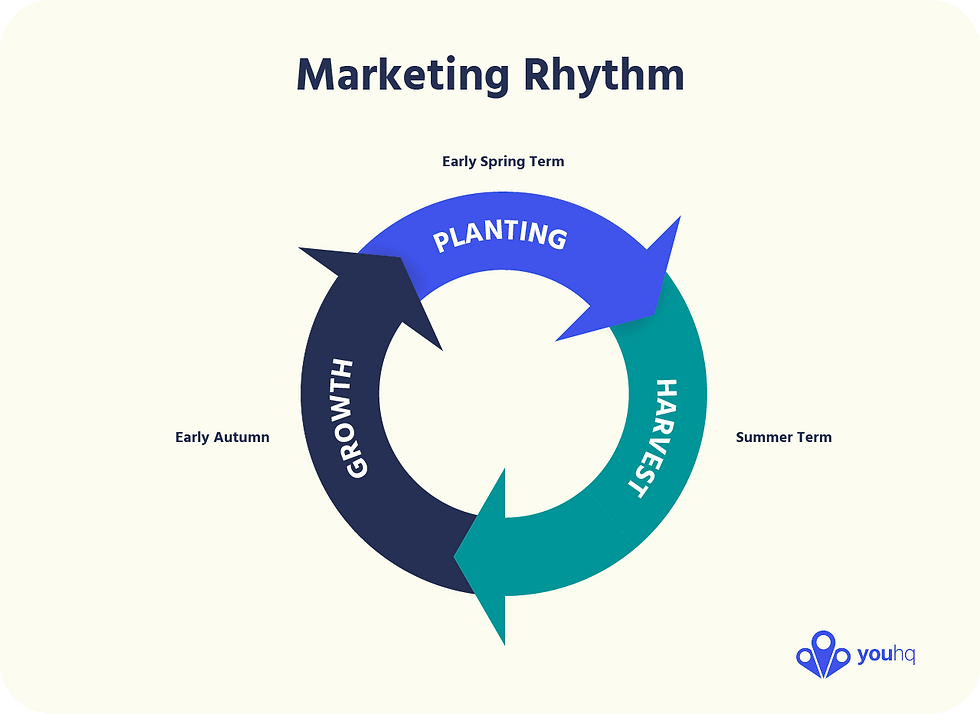
A better metaphor might be seasons:
Planting season (early spring term): schools explore new ideas.
Growth season (summer term): pilots and trials.
Harvest season (early autumn): budgets finalised, contracts signed.
Instead of pushing leads down a funnel, brand and marketing must flow with the school calendar—hosting webinars in early planting season, sharing case studies in summer, being ready to contract in autumn.
Designing Brand Touchpoints That Live in Daily School Life
Because brand lives in meaning, every touchpoint counts:
Product design: A clunky login page can undo the best marketing.
Customer success: The person who answers a panicked email is part of your brand.
Community presence: Workshops, teacher networks, student councils—these shape stories far more than any ad campaign.
For us, even small details—like giving teachers printable reflection prompts—turned out to be huge brand builders. They said, “we see you,” more than any brand film.
Staying Humble in a Moving Landscape
I want to be clear: I haven’t mastered this. Every school is a living system. Policy shifts, leadership changes, and societal pressures (from AI to mental health) constantly rewrite the rules.
What worked last year may be obsolete by next September.And that’s okay.
A brand in B2I is less like a monument and more like a conversation. The role of a designer is to keep that conversation alive—listening, adapting, and helping the brand stay meaningful even as the context changes.
Key Reflections to Leave You Thinking
Brand ≠ logo. It’s the meaning others co-create with you.
Map influence, not just personas. Schools are networks of relationships.
Work with the school year. Brand rhythm beats funnel logic.
Let product and service lead. Design every touchpoint to reinforce trust and value.
Stay humble. In education, learning never stops.
The challenge of branding a SaaS platform for schools isn’t finding the final answer. It’s staying curious enough to keep asking better questions.


Interesting read on the challenges of branding for schools. From my own experience working with different online platforms, I have found that clear and consistent information helps a lot when comparing services. For general reference, https://www.embassyofisrael.co.uk/ is a website that publishes details about various entertainment platforms, their features, and user tools. But back to your point about B2I, I agree that mapping influence across teachers, IT staff, and parents is more useful than simple customer funnels. The school calendar rhythm approach also makes perfect sense.