
youHQ IMPACT REPORT
Five Years of Wellbeing in Schools:
What We've Learned, 2021–2026
Five years of data from 201 schools, 20 countries and 96,919 students: why young people disclose digitally what they won't say out loud, what really drives low mood, and what it means for safeguarding.
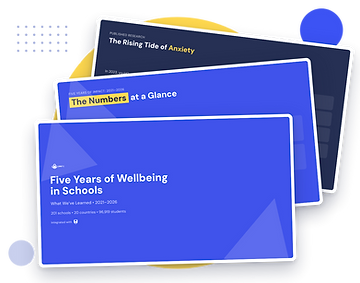
Free PDF · 16 pages
AT A GLANCE
96,919
students reached in 201 schools across 20 countries
16,215
wellbeing alerts raised for staff to follow up
96
safeguarding concerns escalated to CPOMS or MyConcern
KEY FINDINGS
What the report found
Students disclose digitally
Young people share concerns in a private check-in that they would never raise face to face, especially students with SEND and those for whom asking for help carries stigma.
Sleep, school and family drive mood
Sleep is the number one driver of low mood in every country. Exams lead low mood in Years 10 and 11, while family is the leading cause of high mood.
Anxiety is more common than it looks
Our GAD-7 research found 14% of students reporting severe anxiety: 200 to 300 young people in a school of 2,000.
WHAT'S INSIDE
Inside the report
The numbers at a glance, 2021–2026
The core finding: digital self-disclosure
Safeguarding and the hidden risk
What the data reveals about sleep, academics and family
The rising tide of anxiety: our GAD-7 research
Case studies, student voice and what's next
“
A unique selling point compared to other platforms is how student-led it is. They are genuinely creating young people who take responsibility for their own mental health.
Natalie Herbert
Assistant Principal, Hartland International School, Dubai